02 — The material
The material
We recover mineral byproduct and processing residue: material that has already been through a process and remains in stockpiles or is otherwise set aside.
What we recover
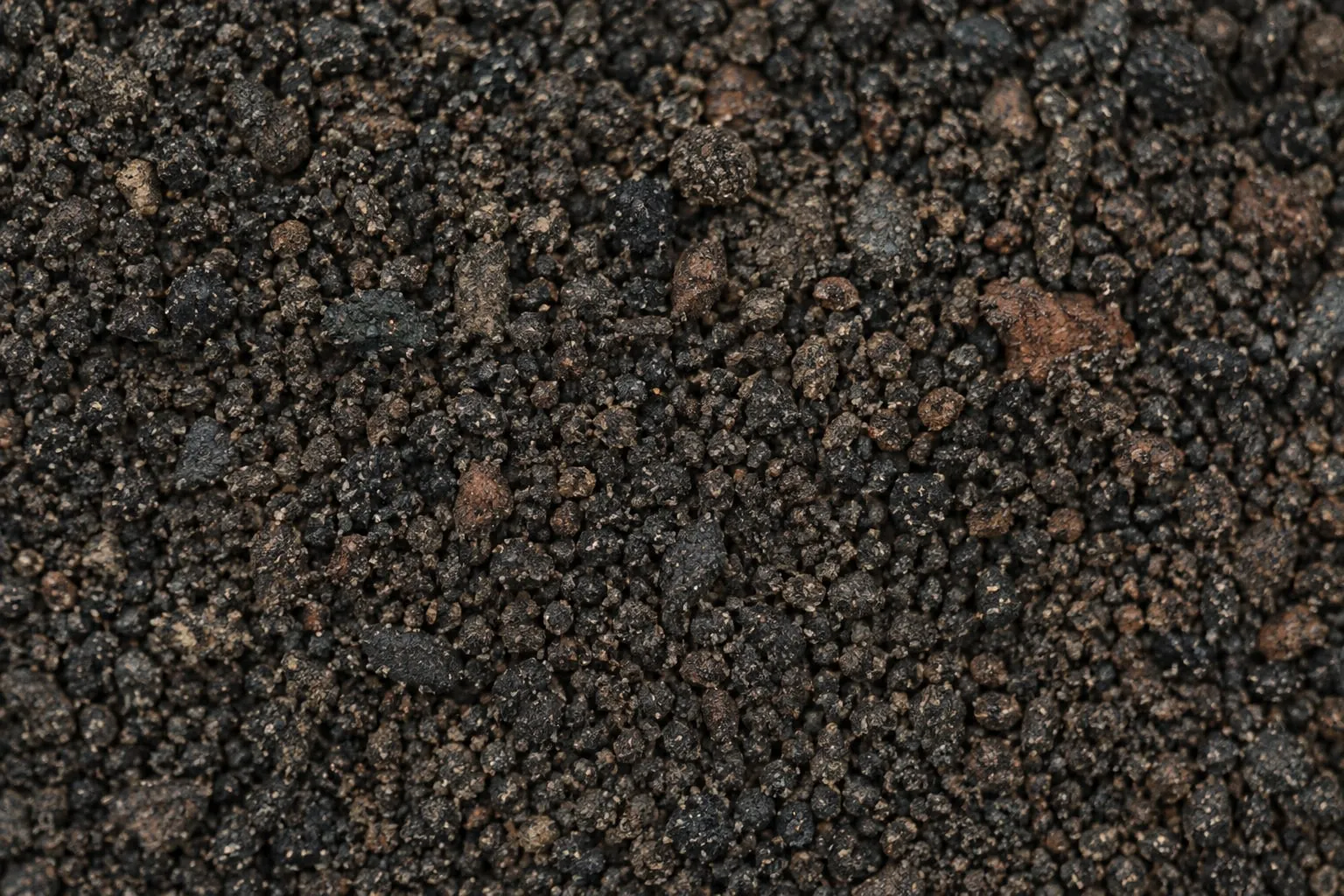
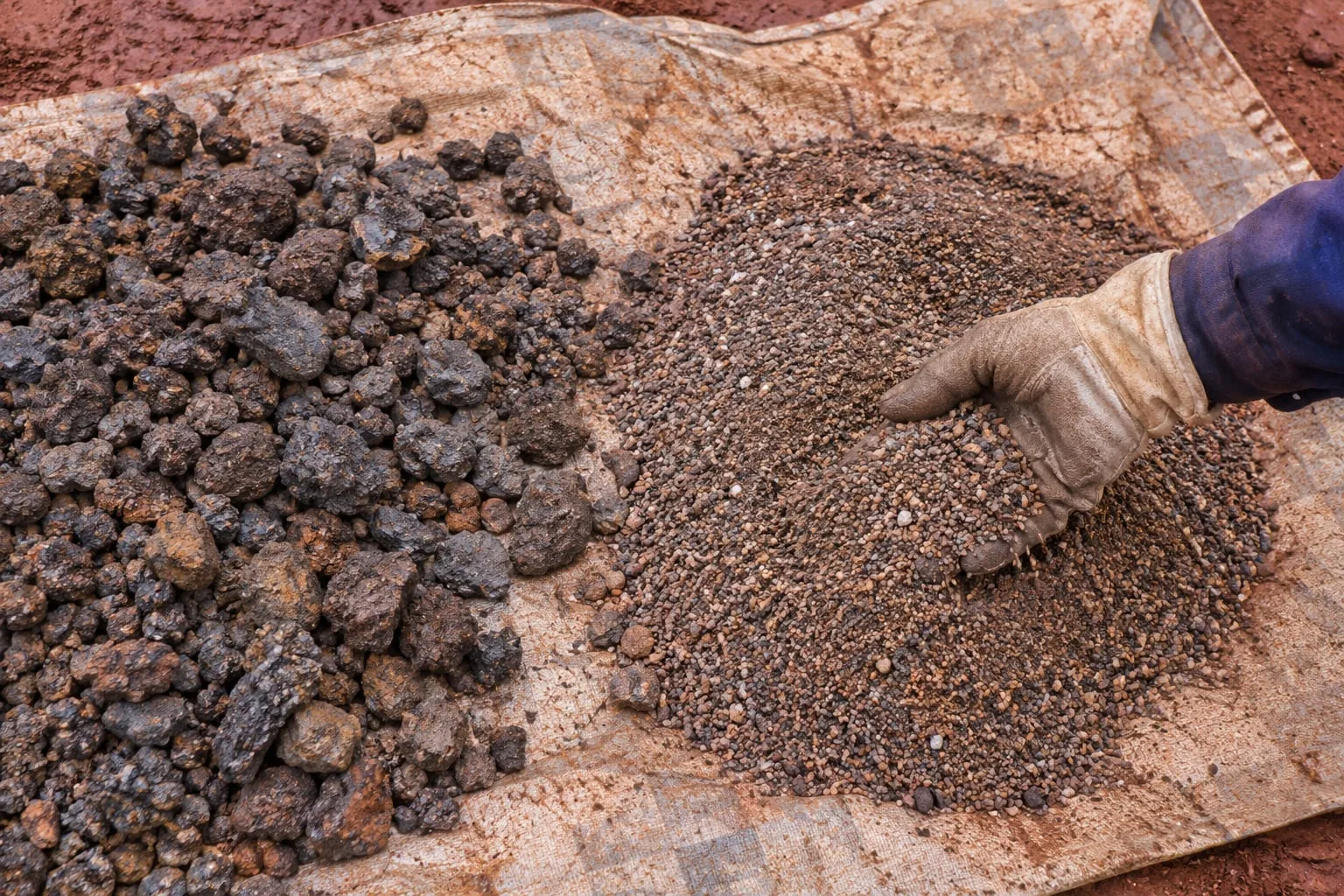
The material is mineral byproduct and processing residue arising in the Kisii–Nyamira belt in western Kenya. It has already passed through a process. It was not the product that process was run to obtain, and it remains where it was left: in stockpiles, on working ground, or set aside near where it was generated.
Left alone, it does two things. It occupies land, and in steep terrain under heavy seasonal rainfall it moves, shedding dust and sediment onto the ground and into the water below it. Recovered and graded, it is a granular mineral input with a describable size fraction and composition.
What we call it, and what we do not
We describe what we handle as mineral byproduct, processing residue and recoverable material.
We do not describe it as waste. That is not a matter of presentation. Waste is a legal classification triggered by an intention to discard, and it brings duties with it: who may carry the material, where it may be held, what documentation must accompany it, and what authorisations a receiving party must hold. Applying the word loosely invites a classification we have not established, and a buyer, an insurer or a regulator may reasonably rely on an enterprise’s description of its own material.
The full argument, including the conditions under which material is properly treated as a byproduct rather than waste, is set out in what “mineral byproduct” means.
The classification of our material under Kenyan environmental and mining regulation has not been formally determined. We have not obtained a determination and we do not claim one.
How it is described to a buyer
A description that a buyer can act on covers four properties.
- Size fraction. The particle size distribution, established by screening and weighing what is retained at each aperture.
- Composition. What the material is made of and in what proportions, assessed by experienced physical inspection and by laboratory analysis where a buyer requires it.
- Moisture. The condition at the point of sampling, recorded with the sampling moment, because moisture affects both process behaviour and the weight the seller is paid on.
- Contamination. Soil, vegetation, plastic, tramp metal, or material from a different source mixed in at the stockpile.
A described property should be accompanied by a tolerance, because a grade without a stated variation is not a specification, and a variation narrower than an operation can consistently hit is a rejection schedule rather than a quality claim. We do not currently state tolerances. What we can hold consistently is being established during the pilot, and a tolerance is a commercial commitment we will not make before the evidence supports it.
What we do not publish
We do not publish tonnage recovered, revenue, jobs created, or environmental savings.
The reason is the same in each case: we have not measured them to a standard we would be willing to defend, and a plausible figure that nobody has measured is worth less than the statement that it has not been measured. An enterprise whose argument is that records create value cannot decorate its own pages with numbers that have no record behind them.
We do not currently hold laboratory analysis for the material. Where a buyer requires assay, it would be arranged, and the result would travel with the consignment rather than be summarised here.